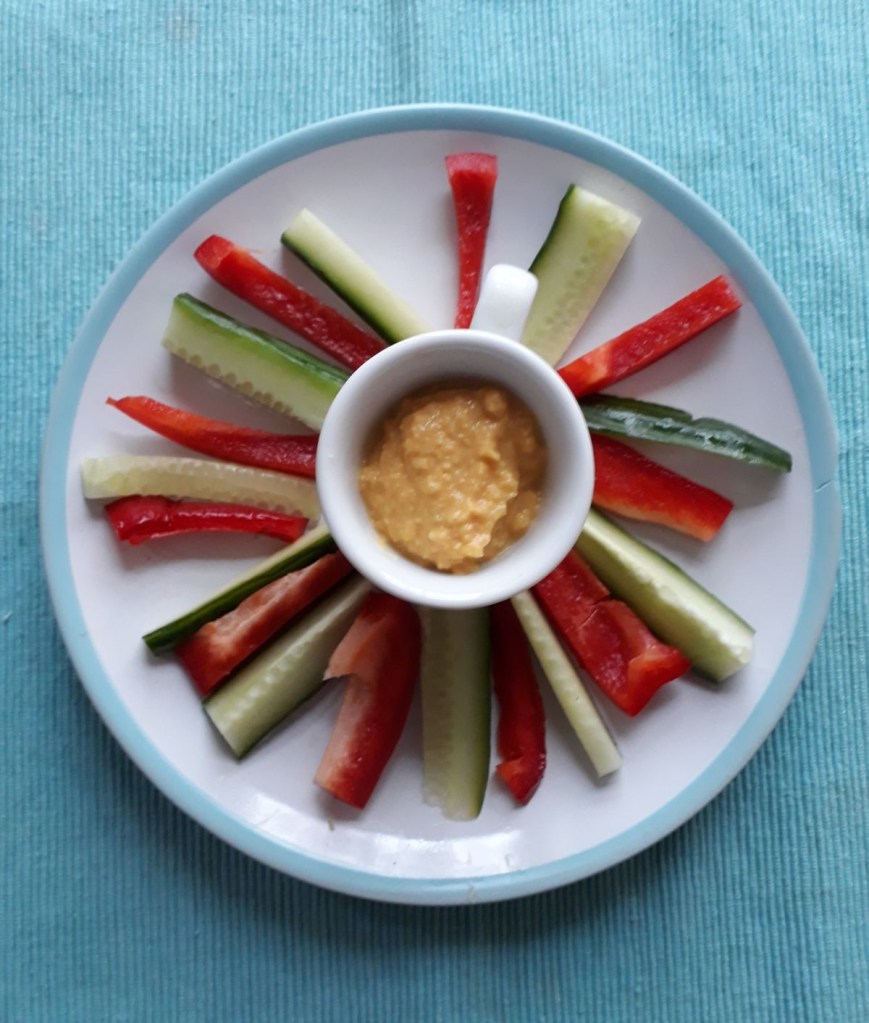
Healthy Hummus (sesame free)

We’ve got a great recipe here for a healthy, homemade hummus – sesame free for those that are allergic or work in allergen sensitive settings…

Ingredients:

  • 400g tin of chickpeas, drained and rinsed 
  • 1 Garlic clove, crushed
  • 2 tbsp olive oil
  • 100ml water
  • 10 cumin seeds, crushed
  • 1 tbsp lemon juice
  • 1/4 tsp turmeric
  • 1/4 tsp paprika

In a food processor, combine all ingredients. Process for two mins or until smooth and creamy. Half way through, use a spatula to push pieces off the edge of the processor.

Serve and enjoy with some fresh vegetable dippers as a super healthy snack…
It’s More Fun With A Friend

Exercising can become boring over time, this is a leading reason many people quit, inevitably resulting in a decline in their health & self esteem…

Experience and supporting studies have shown that working out in a group is not only more fun but more effective as people work harder when they are among their peers…

Boot Camps & Classes are a great way of meeting new people and sharing a fun & varied workout, therefore increasing the longevity of your results….

The Perfect Lunge Technique

Lunges are 1 of your 5 key movement patterns and a great way to develop your quads & hips, providing support to your knees, hips & ankles….

To get the most out of them and prevent injury it’s essential that they are done correctly… We’ve got a quick demo for you to help you smash your lunges every time….

Fats: Friend or Foe?

Fats, Facts & The British Diet 
–> First:
ignore the horror stories, you need fat in your diet!!!
However, it is not as simple as that…We require specific types of fats and in lower amounts than most of us consume…below are some useful facts:

– Fat = 9kcal/Gram whereas Carbs & Protein = 4kcal/g, Fat is energy dense!!
– Saturated & Trans Fats have no health benefits & contribute to high levels of bad cholesterol
– Excessive fat intake is linked to: obesity, diabetes, heart disease, strokes & cancers
– UK average = 12.7% of our energy comes from saturated fat which is 1.7% higher than recommended & 35% of our total energy consumed is from Fats
– UK average is close to its recommendation for Omega 6 but far from it’s Omega 3 needs

Why We Need (some) Fats 
Fats provide us with essential fatty acids which the body cannot produce itself. These are needed to support a variety of functions:
– absorb fat soluble vitamins: A, D & E
– support healthy cholesterol balance
– sources of Omega 3&6 needed to support: brain function, blood pressure regulation & many more
– a source of energy

Types of Fat
It is important to distinguish between the types of fat as there is a considerable difference in requirements and the effect on our health.

Unsaturated
Commonly referred to as good fats, unsaturated fats provide us with all of the essential fatty acids required to perform vital bodily functions. These can be further broken down into 2 categories:

Monounsaturated:

  • found in: Olives, Olive Oil & Spreads, Avocados, Almonds, Peanuts & Brazil Nuts
  • Helps to maintain HDL (good cholesterol) & reduce LDL (bad Cholseterol) by taking it to the liver to be disposed of

Polyunsaturated:

  • 2 types: omega 3 & omega 6
  • Omega 3 Sources: oily fish
  • Omega 6 Sources: rapeseed, corn, sunflower, some nuts
  • Lowers both good (HDL) & bad (LDL) cholesterol

Saturated Fats:
Commonly referred to as ‘Bad Fats’, they offer no health benefits and can contribute to high cholesterol and a range of health risks.

Sources of Unsaturated Fat:
– Cake, Pastry, Biscuits & Chocolate
– Processed Meat eg. burgers & sausages
– Butter, Cheese, Ghee, Suet, Palm Oil & Lard
– Fatty Meats

Trans Fats:
These are also considered as bad, like Saturated Fat they increase Bad Cholesterol in the body, provide high amounts of calories but no health benefits.
– Found naturally in low levels in some foods
– Also formed from processing vegetable oils from liquids to solids, known as hydrogenation. These are commonly used in processed foods: cakes, biscuits, pastries & Margarine

Tips To Take Away:
– Reduce Saturated & Trans Fat intake, aim for majority of your fats to be unsaturated
– Consume 2-3 portions of Oily Fish/Week (omega 3)
– Grill Meet allowing fat to drain away
– Cook in Rapeseed Oil (minimum amount)
– Engage in regular pulse raising exercise
– Read the labels before you buy

References:
McArdle, W., Katch, F., & Katch, V. (2010) Exercise Physiology, 7th Edition:  Nutrition, Energy & Human Performance. Lipincott, Williams & Wilkins. Baltimore
https://www.nutrition.org.uk/nutritionscience/nutrients-food-and-ingredients/fat.html?limit=1
https://www.nhs.uk/Livewell/Goodfood/Pages/Fat.aspx

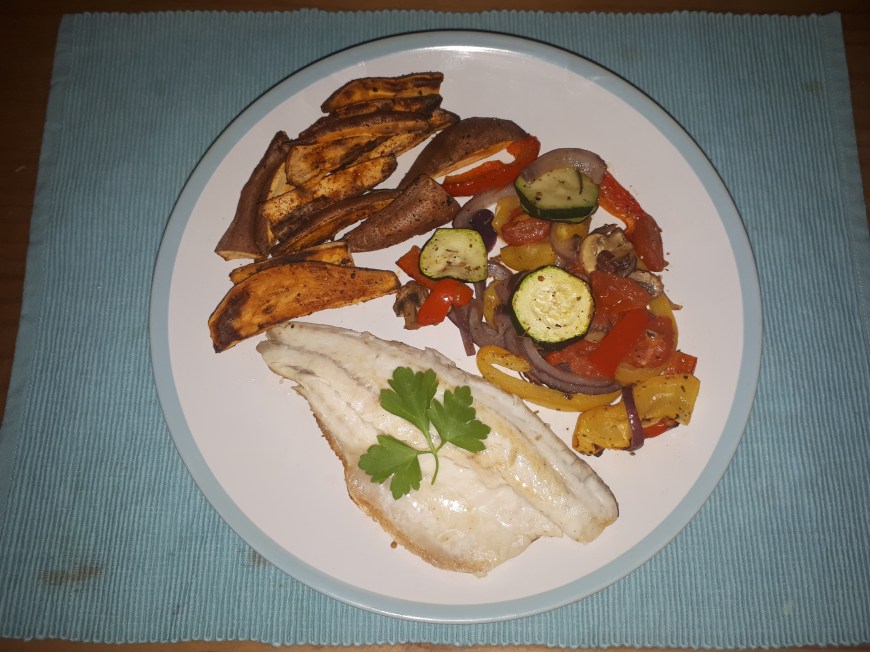
Sea Bass, Roast Veg & Sweet Pot Wedges

This simple recipe is a low fat, high fibre dish that requires minimal effort but tastes great.

Prep: 5  minutes
Cook: 30-40 minutes
Serves: 2

Ingredients:
– 2 sea bass fillets
– 1 red onion
– half a yellow pepper
– half a red pepper
– half a courgette
– handful of cherry tomatoes
– handful of mushrooms
– black pepper
– herbs of your choice
– paprika
– rapeseed oil
– 2 medium sweet potatoes 

Cooking Instructions:

  1. Pre-heat the oven to 180-200c (fan) depending on your over, ours is a beast
  2. wash and slice 2 sweet potatoes into wedges (skin on)
  3. add wedges to preheated baking tray, season to taste with paprika, pepper and a light drizzle of oil – shake in pan to evenly coat
  4. bake for 15-20 mins – until wedges start to soften
  5. whilst baking the wedges wash and chop veg into a deep baking tray
  6. season with herbs of choice, we chose fresh rosemary, pepper & dried mixed herbs, drizzle very lightly in oil
  7. add to oven, stirring wedges & veg occasionally
  8. 10 minutes later: heat a frying pan with 1-2 drops/sprays of oil
  9. once hot add the Sea Bass Skin down, cook 70% skin side down for a crispy skin, turn over briefly
  10. Cook until fish turns white throughout
  11. Serve & Enjoy