Huge Weight Loss Promises (the facts)

It seems that you can’t log onto Facebook now without seeing HUGE weight loss promises:

  • lose 10lbs in a week
  • drop 2 dress sizes this month, easily
  • lose a stone in a month
  • it’s easy & fun

 In other words: ‘buy my pills & potions and don’t eat any food and you’ll lose weight’, you’ll feel like crap, spend £ & put the weight back on but they won’t tell you that.

Good News: Losing weight is easy and you can eat real food including chocolate!!!

Today we will focus on the proven science behind weight loss and the facts:

 Why Do We Gain Weight (fat)?

The foundation of weight loss/gain is the same regardless of the factors involved, it is very simple:

***it can only happen when there is an excess of calories***

Fat Decreases: When energy out is higher than energy in…*** you burn fat when you are in a calorie deficit and need to burn your reserves***

How Many Calories Are In 1Lb Of Fat?

  • 1lb = 3500 calories
  • to gain 1lb you must consume 3500kcal more  than you use
  • to lose it’s the same in reverse, you must burn 3500kcal more than you consume

 Apply The Maths To Weight Loss Promises:

To maintain a healthy weight:

  • Avg Male requires roughly 2500kcal/day
  • Avg Female roughly 2000kcal/day

 If we are gaining weight it’s safe to say that we are over this target and probably not active enough.

 To lose fat, first we must understand that our base should be 2000/2500kcal/day but then also drop below this and increase energy out to start losing some of our stored fat.

 The evidence shows us that a safe range of weight loss is 0.5-2lbs/week, you should never drop below 1500kcal/day, believe it or not you need to eat real food.

 Weekly Weight Loss, Simple Maths:

  • Average Male Requires 17,500kcal/week
  • Average Female Requires 14,000kcal/week
  • 10lb’s fat loss = 35,000 Calories

 This is a deficit more than you should even consume in a week meaning that essentially you eat nothing, it is starvation.

 Where The Sales Come In

Don’t worry about the little factor of not eating, because these con-men can sell you ‘magic’ pills & potions to replace the food that you are not allowed to eat, however anybody qualified in nutrition that puts your health before profit knows why these are Unsafe & Don’t Work.

  • – You cannot store vitamins & minerals, supplements may give you a small amount before       urinating the rest (& your £) out and leaving  you depleted until your next pill or shake
  • – Liquids are proven to not trigger the same level of satiety meaning that they wont stop the   agonising hunger pains as your body screams for real food
  • – liquids & pills digest quicker causing a faster spike and drop in blood sugar, energy levels and increased hunger
  • – severe calorie restriction causes your metabolism to slow right down, weight loss will subsequently slow down and when you return to food you’ll pile the weight back on
  • – This is textbook YOYO dieting

 Let Me Ask You Something:

  • – Would you take medical advice from someone not medically trained?
  • – Would you have your car MOT’d by a baker?
  • – So why would you trust your health to someone not trained in nutrition?
  •    (L3 Nutrition Diploma or higher)

Our Top Tips Which Consistently Work For Our Clients:

  • Combine exercise with calorie reduction to prevent slowing of the metabolism
  • Aim for a 500-750 calorie/day deficit from exercise & food rather than 1 or the other
  • this will still give you >1lb/week fat loss
  • invest time into learning about food – we have plenty of articles to help you
  • take the money you saved on pills & potions and invest in the gym, swimming, badminton,   exercise classes etc
  • set realistic targets based on the maths we’ve given you
  • when happy with your body fat % adjust to your recommended daily intake
  • My Fitness Pal is awesome!!!
  • If you are lost seek help such as a personal trainer or nutritionist, but your first question is ‘what qualifies you to help me?’
  • We can help you with online support services if you’re completely lost

 good luck guys & happy health

Tom’s
Meet Our Trainers

Our team are blessed in really loving what we do…

 IMG_201905266_125128

Tom:

With 15+ years of experience Tom has earned a truly diverse education in Heath & Wellness…There is a world of confusing information out there, luckily Tom has a talent for clearing the mess and making it simple and easy to achieve.

Tom has a lifetime of sporting history with a strong interest in golf, cycling and martial arts.

Tom uses his sporting background to make training sessions more enjoyable, often we play rather than train…exercise can be fun…


Holly:

IMG_20190526_122045_1

As our nutrition specialist Holly will surprise you with her in depth knowledge of all things food.

Holly has valuable experience in nutrition, weight management and the food manufacturing industry.

 Holly’s skills are not limited to nutrition though as she is a keen exerciser and no stranger to triathlons. Holly is also qualified in GP Exercise Referral allowing her to cater for clients with varying illnesses and limitations.

How We Can Help

We Offer A Range Of Bespoke Services Designed To Meet Your Needs With Minimum Disruption To Your Busy Life…You Want It, You Get It…

Strength & Toning: 

  • What to train, how & when
  • Technique, maximising effectiveness
  • Recovery & Nutrition, fuel the growth

Weight Management

  • whether you want to slim down, tone up or transform your body
  • what, why, how…it can be easy

Nutrition 

  • All of the above is useless without the right energy balance & fuel
  • we make it simple & easy to adopt

Home Visit, 1:1 & Small Group Personal Training

  • We will bring the results to you

Fun & Fit Boot Camps

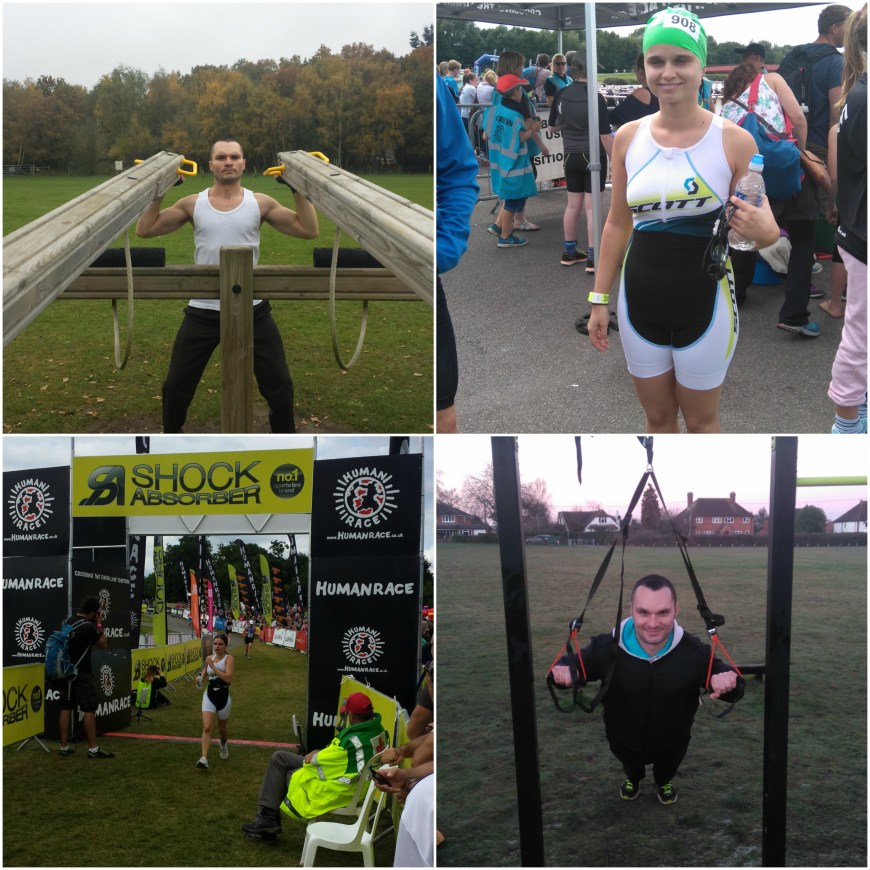
  • The clue is in the name – see us in action below


Free Consultation

  • We’re happy to go through your needs & goals with you before you commit to anything, no pressure!

Your Guide To Understanding Protein

We’ve heard all kinds of feedback from our clients regarding protein, most of which highlight just how misunderstood this essential nutrient can be.
Rather than producing a list of statements longer than anyone wants to read let alone write we’ve prepared this essential guide to understanding protein.

What Is Protein? 

In short all proteins comprise of amino acids, of which there are 22, 9 of which cannot be made by the body (essential amino acids eaa) and must therefore be obtained from food, without these we cannot use protein effectively for it’s primary purpose.

 Why Do We Need Protein?

You probably know that protein allows us to repair and rebuild our muscles & soft tissues. It is true that good sources of protein containing all 9 EAA provide the building blocks to repair wear & tear and develop new tissue.

  It may be lesser know that protein is also essential for growth & maintenance in:

  •  hair, skin, nails & eyes
  •  forming antibodies in the immune system
  •  insulin – stores energy in the muscles & regulates blood sugar
  •  hemoglobin – carries oxygen in the blood

 How Much Do I Need?

This is where many myths and over consumption tend to occur. Your protein requirements are dependent on 2 factors: 1) your body weight & 2) your activity level & muscular breakdown.

 1) Inactive or Moderately Active 

Adult members of this group will have an average level of daily soft tissue breakdown and therefore will be safe within the recommended daily intake set by the department of health, this being 0.8g/kg body weight.

eg if you weigh: 100kg x .08= 80g/day.

 2) Regularly Active

People exercising regularly in more vigorous sports, particularly weight lifting will experience greater soft tissue breakdown and therefore require proportionately more protein to facilitate effective recovery and the development of new tissue (bigger muscles).

 Weight lifters for example are recommended to consume 1.8-2.2g/kg during recovery which usually lasts 48 hours after training.

eg. a 100kg adult: 100kg x2 = 200g/day

 Too Much vs Too Little

Too Much: There is some evidence to suggest that unnecessarily high intakes of protein can contribute to the demineralisation of bones, high cholesterol, high blood pressure & possible kidney damage.

Protein contains 4kcal/gram, the same as all carbs. Although these kcal are released slower than carbs excessive protein intake will still lead to increased body fat.

 In recent years protein has achieved main stream popularity with people operating on the assumption that it will help you get bigger muscles and lose weight, whilst there is truth to this it’s 100% dependent on kcal in vs kcal out and ensuring that you insight enough breakdown to the desired muscles…in other words if you are not working out effectively all of the protein in the world will not make you ‘bigger‘.

 Too Little: On the other hand, working out for 10 hours a day but neglecting your protein intake is more likely to make your muscles smaller and will definitely not make you bigger or stronger.

Regularly failing to meet your protein needs whether active or not can cause a disruption in your body composition, hormone and energy levels and lead to illness.

 Sources: Food vs Supplements

We’ve seen how important it is that our protein intake reflects our requirements.

The best sources of lean, complete proteins consistently prove to be:

  • – chicken (breast, no skin)
  • – turkey (breast, no skin)
  • – Oily Fish (Omega 3 source)
  • – chick peas (low fat, high fibre)
  • – soy (low fat, high fibre)

 Protein Powder, When To Use It:

Millions fall victim to marketing campaigns every year parting with crazy money for a product they don’t understand getting little to no results.

Powders have 2 distinct appeals: 1) they are cheap & 2) they are convenient

The variety of powders available means that we cannot generalise them, however we know that many contain artificial sweeteners, flavouring, sugars & fats that people may be over looking.

 More importantly though, they are powdered meaning that they can be digested quicker, this is only a real benefit immediately after a workout and first thing in the morning.

 Our recommendation is to save your money and invest in lean proteins which provide a slower release of amino acids into the blood.

eg. our 100kg weight lifter would benefit most from 8 evenly spaced portions each containing 25g protein through a 16 hour waking period. Perhaps they will have a protein shake upon waking & immediately after a workout equaling 2 of their portions

 There is much more that we could add to this, there is more than enough here though to ensure you can say ‘I understand Protein’.

 Be A Doer!
Tom’s

 References: 

  • Department of Health: Report on DRV for Food & Energy (2010)
  • WHO: Energy & Protein Requirments (1985)
  • NHS Choices

Easy Homemade Nut Butters, No palm oil, salt or sugar…Just great flavour…

After a lengthy and frustrating quest to find the healthiest peanut butter around we gave up and decide to make our own, its actually really easy and the results are perfect.

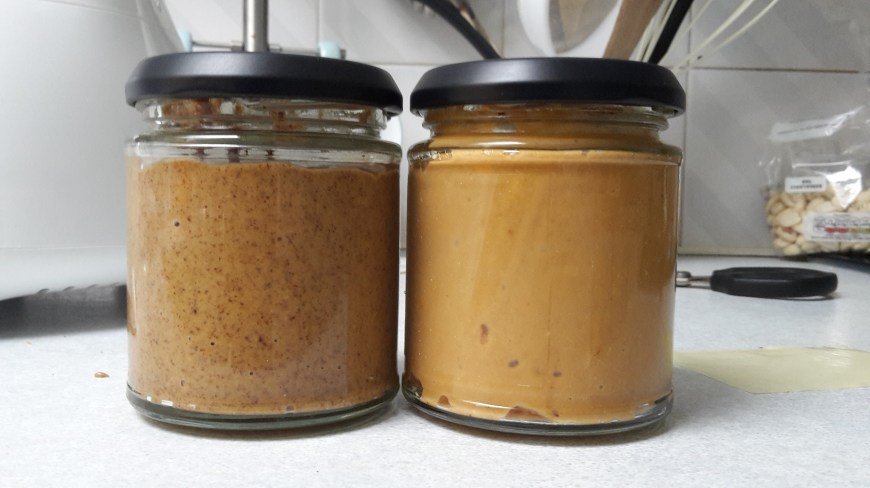
 This recipe can be applied to a number of nuts, so far we’ve tried peanuts & almonds as shown below…

  • an empty jar for your nut butter
  • baking tray & grease proof paper
  • food processor and grinder

 Ingredients:
– your choice of nuts
– 1.5 Tbsp rapeseed oil

– To get the correct quantity of nuts, fill your jar or container 1.5x with the nut of your choice.
– To get a full and richer flavour, and to loosen the oils in the nuts, start by roasting the nuts on a baking tray lined with grease proof paper. Pre-heat your oven to 180’C and roast for about 10 mins, until they are slightly browned and glossy with oil.
– Transfer straight to your food processor. This will take several mins to create a smooth peanut butter.
– To start with, pulse your nuts until they are broken into pieces roughly 0.5cm. If you would like a chunky nut butter, remove a few spoonful’s of nuts at this stage and place to one side.
– Blend your nuts until it has the appearance of couscous. The food processor may push the nuts to the side of your food processor. You will need to blend the nuts for around 30-60 seconds at a time, then use a spatula to push off the sides. You will need to repeat this process several times while the nuts have this appearance of couscous.
– After several minutes, you will notice the nuts are starting to clump together. Keep repeating the process of using the spatula to remove from the side of the food processor until it has started to form larger clumps.
– add the oil
– Continue to blend for another couple of mins. You will notice the appearance is starting to look like peanut butter. 
– When happy with the consistency, remove the blade of your blender and stir in the chopped nuts left to the side.
– Transfer your nut butter to a jar or container and enjoy.

Which Taught Exercise Is Right For Me?

Why Do I Need Instruction?

Answer this question with another: ‘Do I Want Maximum Results & Low Risk?’

 Professional instructors considerably increase your chances of success and shorten the lengthy process of learning how to achieve your goals, in the same way that a driving instructor increases your chances of passing your test.  Learning how to eat & exercise for success if commonly neglected by new & regular exercisers resulting in little to no results but plenty of frustration.

 Oh, Yes, But Personal Training is:

  • a luxury
  • too expensive
  • unnecessary

 This is far from true….
– You Can Enjoy The Benefits Of Professional Instruction From £5/Week – 

 We live in a wonderful age of health awareness, as a result a wealth of options are available to us all, each with its own benefits and limitations, the summary below should help you choose which is right for you.

 Group Classes:

Benefits:

  • generally cheap (around £5/class)
  • large groups allow you to blend in
  • can make or take friends
  • can work at your own pace

Limitations:

  • group size means less attention from the instructor
  • sessions delivered for general audience, structure may not be relevant to you (too easy/too hard)
  • groups can be over populated

 Small Group Training: 

Benefits:

  • great way to train with friends
  • share the cost of a more personal session, instructor to yourselves
  • structure can be more relevant/tailored

Limitations:

  • still some compromise for ability of group
  • instructor is still shared but by less people

Benefits:

  • personalised training specifically for you
  • undivided attention from your trainer
  • private training environment

Limitations:

  • more expensive than groups
  • most effective over a period of time
  • finding a reliable trainer

 Online Training:

Benefits:

  • Flexible: can be done when & wherever by any trainer
  • casual, plans can be purchased individually as and when needed
  • can be done via email and/or Skype from anywhere

Limitations:

  • limits instructors ability to teach correct techniques
  • no equipment or facility is provided
  • relies on self motivation to follow plans

 Any help is better than no help and whether you spend £5 or £50 you’re investing in your health…We hope that this has been helpful in deciding which approach may be helpful to you…

– Being Healthy Doesn’t Have To Be Hard –