Boulder Shoulder Workout

Strong Shoulders.. .

They look great & provide the foundation for all up upper body lifts…

Including shoulder development within your routine will help protect you from injury as well as aid you in continuing to progress in lifts such as your bench press…

We’ve got a simple & super effective shoulder workout for you:

– Military Press: heavy 5×5 (explosive press)
– Dumbell Circuit, slow, lot’s of tension 7reps each x 3 rounds
Front Raise
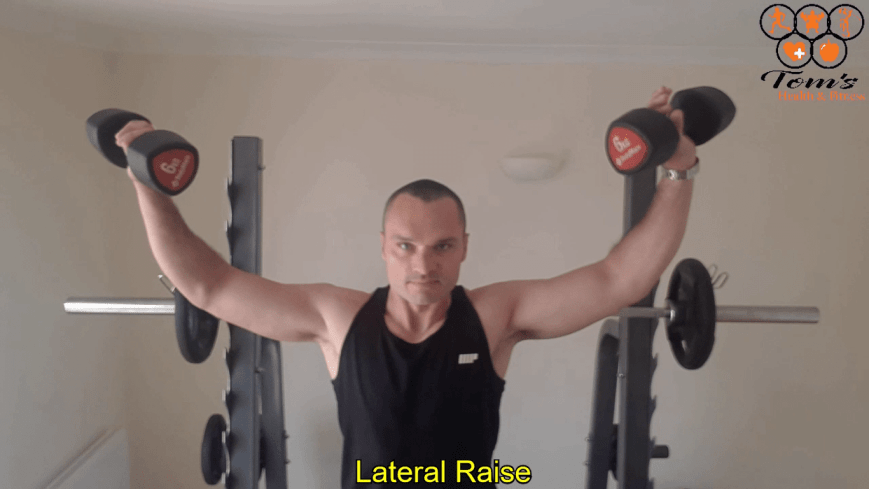
Lateral Raise
Rear Delt Flye
– Face Pull 3×10-15
– Y-Raise 3×10-15

Enjoy…

Strength vs Size

Often resistance or weight training is universally referred to as ‘strength training’, even by personal trainers. This is worrying as in the majority of cases the style of resistance they’re relating to is far from ‘Strength Training’…

It’s important to understand the difference.

Resistance Training
This is simply the process of applying resistance to a given movement therefore forcing the muscles to work harder, resulting in micro tears and inflammation. In time, given adequate nutrition & rest, this can result in larger and/or stronger muscles. The way in which this is done though will have a huge influence on the outcome.

Strength Training
Technically known as ‘Myofibrillar Hypertrophy, this is the neuromuscular process of increasing a muscles force production. This is done by lifting heavy weights in an explosive manor for short periods of time. In our world we often refer to this as ‘high weight, low rep’. This style of training relies on explosive contractions and adaptations within the muscles actin and myosin fibres which produce the contractions.

Size Training
Technically known as Sarcoplasmic Hypertrophy this uses metabolic overload and the accumulation of blood and sarcoplasmic fluid within a muscle to produce micro tears to the lining , the result is an increase in size & glycogen (sugar) storage but not necessarily strength. These adaptions are achieved by working the muscle under tension for longer, with a lower weight in a controlled manor. Typically this will be achieved via sets of 10+reps lasting at least 45 seconds where the individual adds voluntary muscular contraction to increase blood flow to the working muscle. We often refer to this as ‘low weight, high rep’, training for ‘pump’ or ‘metabolic overload’.

Which One Is Best
Traditionally it was believed that Sarcoplasmic Hypertrophy cannot occur without Myofibrillar as the process of lifting any weights should make you stronger right?! However new research is showing that this may be untrue and that focusing on one may result in a reduction in the other.

Sarcoplasmic Pro’s & Con’s
– quick increase in visible size
– pump feels great
– no real increase in strength
– not functional adaption – fairly useless to an athlete

Myofibrillar Pro’s & Con’s
– Functional adaption – stronger
– Great for sport
– Also makes muscles bigger
– High demand on the nervous system

We recommend using a periodised training programme that would have you working solely within each field for 6-12 weeks before transitioning to a pyramid system that utilises both for 6-12 weeks.

We will release individual articles on all 3 of these offering example training plans & rep ranges.

Regardless of which phase you’re in your results will remain dependant on applying sufficient overload to your muscles paired with adequate rest & nutrition.

Happy Health,
Tom’s

Metabolic Overload Training

Metabolic Overload or Metabolic Stress training is 1 of 3 key ways in which you can train to gain (muscles)…

What Is It?

Essentially Metabolic Stress training is the process of training for ‘the burn’ & ‘muscle pump’ which relies on the constant pumping of blood into the working muscle, the blood fills the muscle resulting in micro tears of the muscle fibres and the accumulation of metabolites which are thought to then trigger anabolic signaling (trigger to grow).

How Do I Do It?

Metabolic stress training relies on the muscle remaining under tension throughout the entire set, the following points summarise this technique:

  • 10-20 reps/exercise
  • 3-4 sets/exercise
  • No rest at the top or bottom of the lift
  • avoid locking out at the top of lifts
  • constant tempo eg. 2020
  • <60 seconds rest between sets
  • rep to momentary failure

Applying It To Your Routine:

As we’ve said before all professional lifters and athletes alike will us a system of Periodization when planning their training, once again we recommend using a structure plan that periodically transitions through each of the 3 Hypertropthy systems offering well rounded and progressive results.

We hope that you find this information useful.

Happy Health,
Tom’s