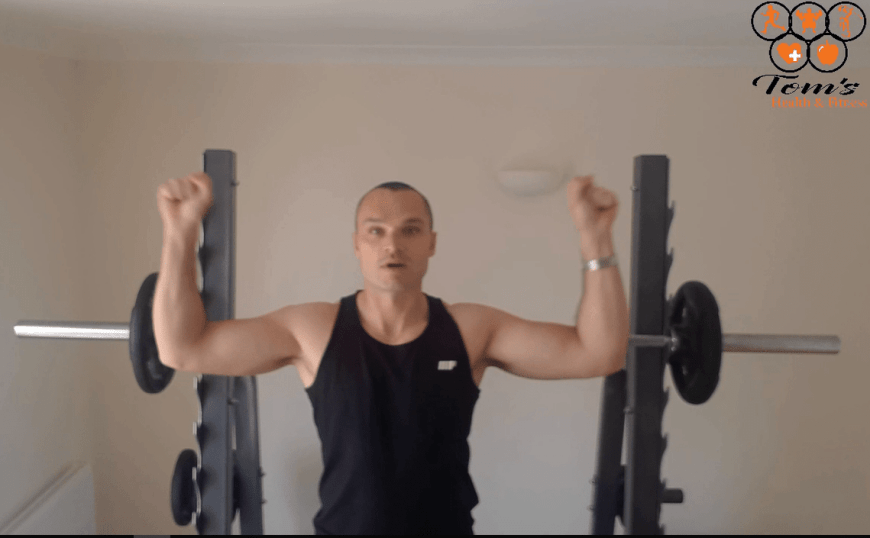
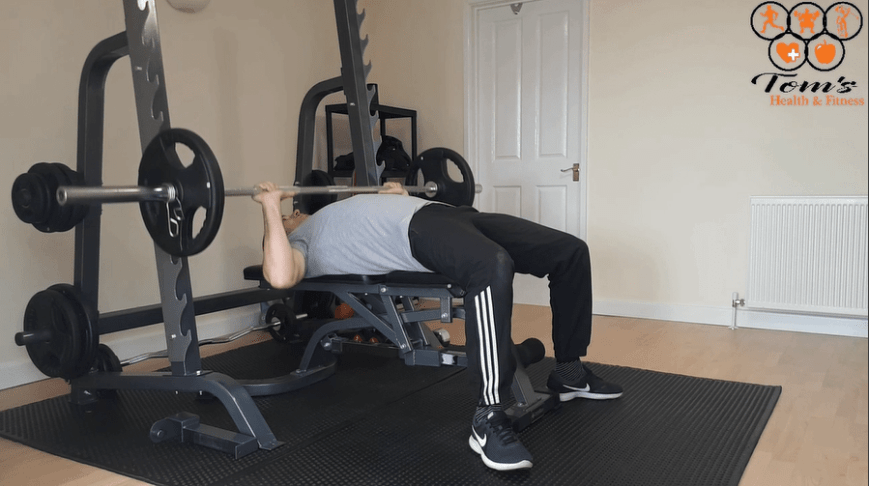
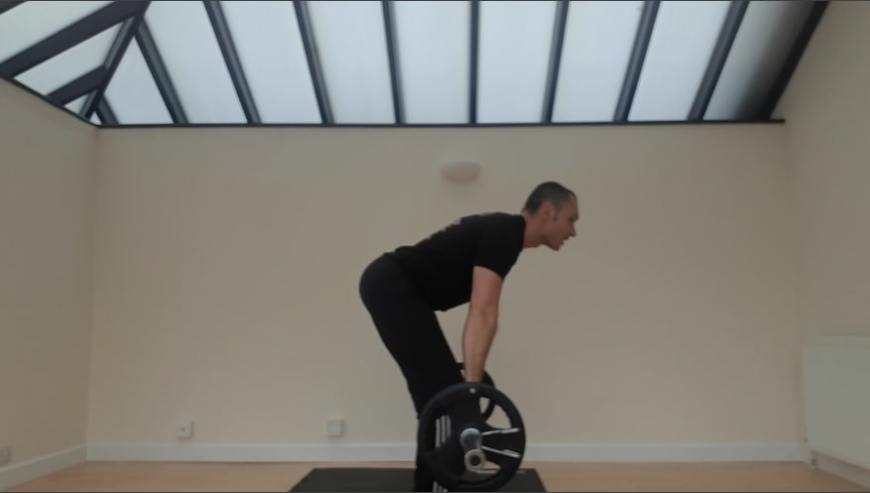
Lunge vs Split Squat

Is it a lunge or a split squat?

Both exercises look similar and are great for developing your legs, however there are a couple of differences.

Both exercises see one leg forward, one back and you lowering your hips until your knees are bent to right angles…The difference however is to do with the concentric phase (straightening the legs.

Lunges: place equal pressure on the heel of the front foot and ball of the rear foot
Split Squats: the rear leg rests whilst the lead leg does all of the work
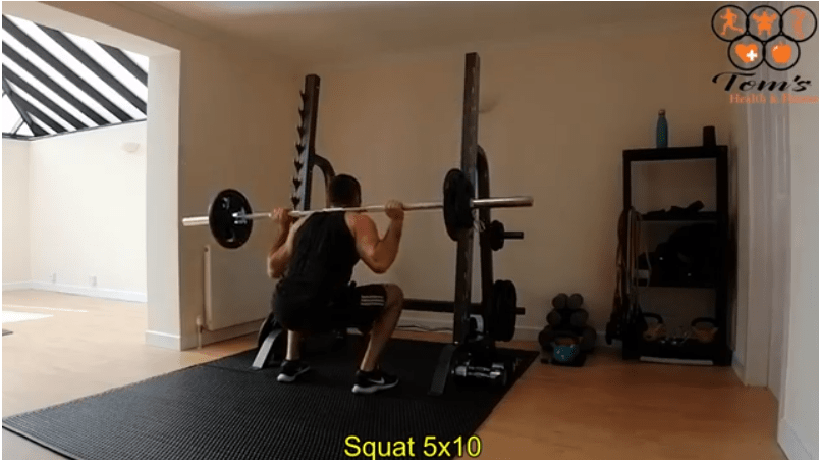
Barbell Leg Workout: For Size!

Have you ever found yourself in a gym with limited equipment?

We can get comfortable in our routine using the same machines & set ups..this isn’t great for progress but also can leave you a little lost when they’re not available.

We’ve put together this leg workout that uses nothing but a barbell & the accompanying plates.

We’ve programmed it using higher (slow) rep ranges to produce a pump (metabolic overload), however you could change this to lower rep, higher weight range for the Squats & Deadlifts for a strength focused outcome.

Enjoy,
Tom’s

Boulder Shoulder Workout

Strong Shoulders.. .

They look great & provide the foundation for all up upper body lifts…

Including shoulder development within your routine will help protect you from injury as well as aid you in continuing to progress in lifts such as your bench press…

We’ve got a simple & super effective shoulder workout for you:

– Military Press: heavy 5×5 (explosive press)
– Dumbell Circuit, slow, lot’s of tension 7reps each x 3 rounds
Front Raise
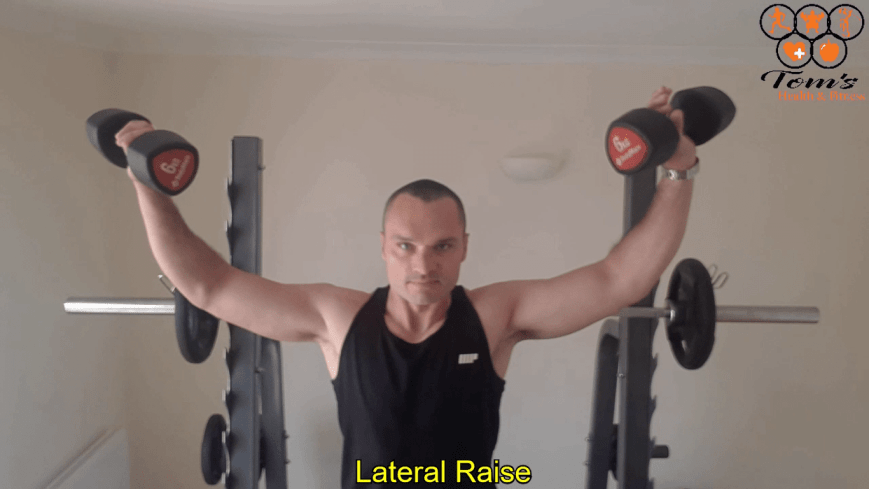
Lateral Raise
Rear Delt Flye
– Face Pull 3×10-15
– Y-Raise 3×10-15

Enjoy…

Technique: It Matters!

Today is a brief one where we’re looking at why good technique is so important…

In exercise, as with many things there are more than way of doing things…again though there is usually an optimum way ie. the best technique…

In exercise & sport correct technique is vital to prevent injury and protect muscles, soft tissue & joints…

Think about an overhead shoulder press…You load the bar up with as much weight as you can just about move, you then try to throw it above your head with jerky, snapping motions and lock your elbows at the top…Just imagine how much stress that places on your shoulder, rotator cuffs and elbows – it won’t be long before you pull or tear something

Benefits of Good Technique:

  • reduce risk of injury
  • activate the intended muscle fibres
  • increase muscle activation in the right area
  • quicker increase in muscle mass & strength
  • leads to heavier lifting = more calories burnt
  • development in the muscles targeted
  • more aesthetic/balanced physique
  • you won’t look stupid (if you care about this)

Tips:

  • Before you try a new exercise invest time in learning the technique
  • We release tons of technique tutorial videos
  • Ask gym staff for advice
  • Employ a Personal Trainer
  • Start light – learn the feeling before going for it
  • use mirrors
  • film your techniques & review them
  • Leave your ego at the door..technique trumps weight/speed
  • If it hurts, STOP!!!

Remember:
You don’t get in a car for the 1st time & know how to drive….Like driving exercises are a skill that must be learn’t

Happy Health,
Tom’s

Hip Mobility Routine

Does tightness in your hips hinder your movement?

Exercises such as squats & deadlifts depend on good flexibility in the hips to prevent the lower back from compensating with spinal flexion to complete range.

Try this routine daily to see huge improvements in your hip mobility.

Foam roll first as a pre-cursor to loosen your muscles.
Hold each stretch for 8-10 seconds and repeat the circuit twice.

Happy Health,
Tom’s

Strength vs Size

Often resistance or weight training is universally referred to as ‘strength training’, even by personal trainers. This is worrying as in the majority of cases the style of resistance they’re relating to is far from ‘Strength Training’…

It’s important to understand the difference.

Resistance Training
This is simply the process of applying resistance to a given movement therefore forcing the muscles to work harder, resulting in micro tears and inflammation. In time, given adequate nutrition & rest, this can result in larger and/or stronger muscles. The way in which this is done though will have a huge influence on the outcome.

Strength Training
Technically known as ‘Myofibrillar Hypertrophy, this is the neuromuscular process of increasing a muscles force production. This is done by lifting heavy weights in an explosive manor for short periods of time. In our world we often refer to this as ‘high weight, low rep’. This style of training relies on explosive contractions and adaptations within the muscles actin and myosin fibres which produce the contractions.

Size Training
Technically known as Sarcoplasmic Hypertrophy this uses metabolic overload and the accumulation of blood and sarcoplasmic fluid within a muscle to produce micro tears to the lining , the result is an increase in size & glycogen (sugar) storage but not necessarily strength. These adaptions are achieved by working the muscle under tension for longer, with a lower weight in a controlled manor. Typically this will be achieved via sets of 10+reps lasting at least 45 seconds where the individual adds voluntary muscular contraction to increase blood flow to the working muscle. We often refer to this as ‘low weight, high rep’, training for ‘pump’ or ‘metabolic overload’.

Which One Is Best
Traditionally it was believed that Sarcoplasmic Hypertrophy cannot occur without Myofibrillar as the process of lifting any weights should make you stronger right?! However new research is showing that this may be untrue and that focusing on one may result in a reduction in the other.

Sarcoplasmic Pro’s & Con’s
– quick increase in visible size
– pump feels great
– no real increase in strength
– not functional adaption – fairly useless to an athlete

Myofibrillar Pro’s & Con’s
– Functional adaption – stronger
– Great for sport
– Also makes muscles bigger
– High demand on the nervous system

We recommend using a periodised training programme that would have you working solely within each field for 6-12 weeks before transitioning to a pyramid system that utilises both for 6-12 weeks.

We will release individual articles on all 3 of these offering example training plans & rep ranges.

Regardless of which phase you’re in your results will remain dependant on applying sufficient overload to your muscles paired with adequate rest & nutrition.

Happy Health,
Tom’s